What Happened at PlayDC: A Case Study in D.C. Liquor Discipline
PlayDC’s Closure Followed Years of Regulatory Effort
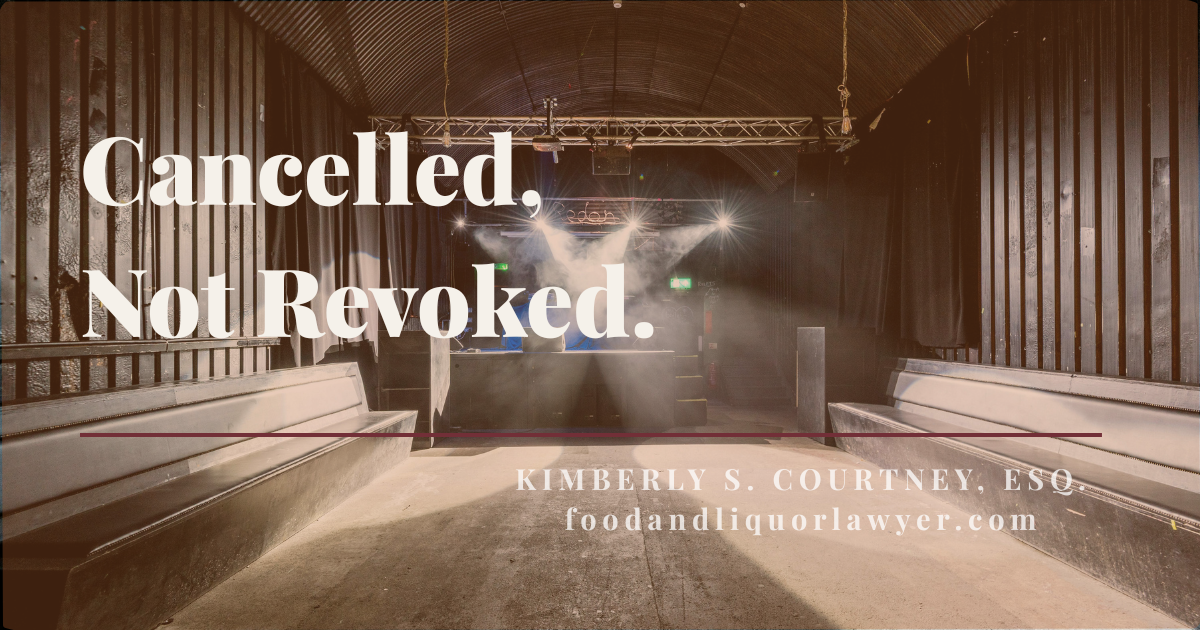
Publicly, PlayDC’s closure was often described as a revocation. Legally, it was something different. The licensee surrendered its Class CT license by correspondence dated September 30, 2025, and the Board cancelled it on October 22, 2025. ABC Bd. Order No. 2025-958 (Oct. 22, 2025). That distinction is the lesson of PlayDC, and the route to it is worth understanding for any operator carrying a record of open compliance issues.
How D.C.’s liquor discipline system actually works
Liquor licensing and enforcement in the District is administered by the Alcoholic Beverage and Cannabis Administration and the Alcoholic Beverage Control Board. The system is built around collaboration. When issues arise, the default response is rarely revocation. The Board imposes conditions: revised security plans, operational limits, monitoring requirements, written settlements. The aim is to fix problems while allowing a licensed business to continue operating. That approach often works.
PlayDC illustrates what happens when a patient system reaches its limits.
The disciplinary record, in the licensee’s own words
In March 2025, PlayDC entered into an Offer in Compromise approved by the Board. By signing it, the licensee admitted to five separate violations. ABC Bd. Order No. 2025-131 (Mar. 12, 2025).
The admitted charges were:
• Permitting illegal sale or use of cannabis at the establishment, in violation of D.C. Code § 25-823(a)(1).
• Allowing the establishment to be used for unlawful purposes, in violation of D.C. Code § 25-823(a)(2).
• Failing to comply with a prior Board order, in violation of D.C. Code § 25-823(a)(6).
• Failing to provide video footage within forty-eight hours of a regulator request, in violation of D.C. Code §§ 25-823(a)(5)(E), (6).
• Failing to follow the establishment’s Security Plan, in violation of D.C. Code § 25-823(a)(6).
The Board imposed $20,000 in fines and a ten-day suspension, with five days served beginning April 1, 2025 and five stayed for one year. None of these are technical paperwork issues. They are the substantive markers regulators rely on when a licensee’s record begins to outpace its remediation.
The settlement phase
PlayDC’s most recent renewal in 2024 was preceded by a protested hearing process. ANC 2G, a Group of Five or More Individuals, and an abutting property owner each filed protests against the renewal of the Class CT license. ABC Bd. Order No. 2023-160 (Mar. 29, 2023). Two settlement agreements followed: one between PlayDC and ANC 2G, dated December 15, 2023, and one between PlayDC, the Group of Five or More, and an abutting property owner, dated January 17, 2024. The Board incorporated both agreements into an order granting the renewal. ABC Bd. Order No. 2024-025 (Jan. 24, 2024).
The agreements set substantive operating conditions: hours of operation, monthly pest control, a 95 dB cap on subwoofer frequencies of 40, 50, and 63 Hz, and a standing two-officer Metropolitan Police Department Reimbursable Detail on every operating night. They also included a thirty-day notice and cure period before any complaint to the Board.
From a regulatory standpoint, the approach made sense. Settlements move faster than full hearings, give operators a chance to correct course, and avoid premature revocation. From the community’s perspective, however, the same problems persisted. Each settlement bought time, and each renewal carried the implicit warning that future violations would matter more. As serious issues continued, the process began to feel less like remediation and more like delay.
The next year, when PlayDC sought a substantial change to extend Sunday hours, ANC 2G, the same Group of Five or More Individuals, and an abutting property owner protested again. PlayDC withdrew the application on June 12, 2025; the Board deemed it withdrawn on July 9, 2025. ABC Bd. Order No. 2025-792 (July 9, 2025).
Why compliance issues are not minor
Security plans and surveillance footage are central enforcement tools. When incidents occur, the ability to promptly produce video and demonstrate compliance often determines whether regulators view a licensee as cooperative or unmanageable. Repeated failures in those areas signal something more serious than paperwork mistakes. They suggest a lack of operational control, and they undermine the credibility of every promise made in prior settlements.
PlayDC’s OIC reflects exactly that pattern. The Board cited a separate failure to comply with a prior Board order, a failure to follow the establishment’s own Security Plan, and a failure to produce footage on demand, each as its own violation of D.C. Code § 25-823. Order No. 2025-131. Discipline tends to accelerate from there.
Cannabis as an added pressure point
PlayDC’s OIC also includes a cannabis violation. Permitting the illegal sale or use of cannabis on a licensed premises is independently grounds for action under D.C. Code § 25-823(a)(1). Even where cannabis is not the central concern, its presence on the record compounds an already serious record and shortens the leash regulators are willing to offer. Alcohol discipline does not happen in a silo.
How it ended, and why the distinction matters
The license was not revoked. It was cancelled at the request of the licensee. ABC Bd. Order No. 2025-958.
The language matters. Cancellation by request is frequently what happens when revocation is imminent. Faced with mounting violations, community pressure, and a likely adverse ruling, operators sometimes choose to surrender the license rather than fight a losing revocation hearing. The doors close either way. But the process reflects how discipline often concludes in D.C.: not with a dramatic revocation order, but with a pressured exit from the system.
The distinction also has long term consequences for the people behind the license. Liquor license applications across the country, whether in another part of the District or in another state, routinely ask whether an applicant, owner, or designated manager has ever had a liquor license revoked. A revocation is a reportable event with a national footprint. It can complicate, delay, or disqualify a future application anywhere a regulator reviews disciplinary history, and it can follow an individual ABC Manager from one establishment to the next. A voluntary surrender accepted by the Board through a cancellation order generally is not classified as a revocation. For an operator considering whether to fight a revocation hearing or surrender the license, that distinction is often part of the calculus, and it is one of the practical reasons cases like PlayDC end in cancellation rather than revocation.
What operators should take from this
PlayDC offers clear takeaways for license holders across the District:
• Settlement agreements are not protection. They are warnings.
• Security plans and video compliance are enforcement cornerstones, not formalities.
• Disorderly premises is a broad concept, evaluated holistically.
• Delay rarely improves outcomes once serious issues persist.
• By the time license surrender is on the table, leverage is usually gone.
• Early, voluntary operational changes often matter more than negotiated conditions imposed after problems become entrenched.
Conclusion
D.C.’s liquor disciplinary system is designed to work with operators. It favors remediation, dialogue, and structured compliance over immediate shutdowns. PlayDC shows that the approach can extend a venue’s life while regulators try to correct serious problems through settlements and conditions. The case also shows the system’s limits. When underlying issues persist, when compliance failures repeat, and when community confidence continues to erode, collaboration eventually gives way to closure.
For an operator with a current settlement agreement or a Board order in the file, the practical question is not whether the system will be patient. It is whether you have given it reason to be.
If you operate a bar, restaurant, hotel, or other retail beverage establishment in the District and have a settlement agreement, an open complaint, or a renewal under conditions, this is the right time to walk through your posture with a skilled advisor and agent. Schedule a consultation at FoodAndLiquorLawyer.com.
About this article. Kimberly S. Courtney, Esq. is admitted to practice law in New York and Massachusetts. She is authorized to appear before certain D.C. administrative boards as an agent, including the ABCA, and is not admitted to practice law in the District of Columbia. This article reflects her experience handling administrative matters and her prior service as an elected member of a D.C. Advisory Neighborhood Commission. It is provided for informational purposes only, does not constitute legal advice, and does not create an attorney client relationship.
About the author
Kimberly S. Courtney, Esq. is a chef and hospitality lawyer. A former restaurant owner, she currently operates La Pasta Lab, an online pasta club (lapastalab.com). She represents bars, restaurants, hotels, and beverage businesses on liquor licensing, employment, and operations matters in New York and Massachusetts, and appears as an agent before administrative boards, including in the District of Columbia, on liquor licensing and related administrative matters. She previously served as an elected Advisory Neighborhood Commissioner in Washington, D.C., voting on behalf of constituents on matters before the ABCA, Zoning Commission, Public Space Committee, and Mayor’s Special Events Task Group. Schedule a consultation at FoodAndLiquorLawyer.com.